Mostrando entradas con la etiqueta Nigella. Mostrar todas las entradas

martes, 3 de diciembre de 2019

{Cheese Stars by Nigella}

Cheese Stars

This is a new variant of an old and easy party favourite. The dough is mixed up in the processor and rolls out easily. It may crack a bit for the first roll-out, but just resquidge together and roll out again like Play-Doh. Unlike other pastries, you don’t have to be afraid of handling it. I keep rolling and re-rolling to the bitter end.

INGREDIENTS

Makes: around 45 stars

200 grams grated smoked cheddar or other strong Cheddar
50 grams soft unsalted butter
100 grams plain flour (plus extra for rolling)
½ teaspoon baking powder
½ teaspoon celery salt
½ teaspoon ground ginger

METHOD

You will need a star cutter, 5cm / 2 inches diameter point to point.

Preheat oven to 180°C/160°C Fan/gas mark 4/350ºF.
Put all ingredients into a food processor and blitz until the dough comes together. Form into two flat discs, wrap in cling film and refrigerate for 15 minutes.
Roll out the first disc of dough on a lightly floured surface to about the thickness of a pound coin / one-eighth of an inch thick and cut out your cheese stars. This is a very good-tempered dough, and any botched stars can be added back to the dough as you go to be re-cut.
Line a flat baking sheet with parchment and arrange on top, then pop into the oven for 12-15 minutes, by which time the stars will be puffed and golden. Repeat the same process with the second batch of dough.
Once the stars are cooked, transfer to a wire rack to cool a little.

MAKE AHEAD NOTE:
The baked stars will keep in an airtight container at room temperature for up to 5 days.

FREEZE NOTE:
To freeze the baked stars let them cool completely then transfer them to an airtight container and freeze for up to 3 months. Thaw the stars on a wire rack at room temperature for about an hour.

You can also freeze the cut out but unbaked stars. Put the stars on baking sheets lined with baking parchment (parchment paper). Freeze the unbaked stars until solid then transfer them to a resealable bag or airtight container and freeze for up to 3 months. Bake the stars direct from frozen following the instructions in the recipe. The stars are quite small so the baking time should be the same.

{Perfect Roast Potatoes by Nigella}

Perfect Roast Potatoes

Needs must and all that, so I have always been an open anti-perfectionist, but in truth (and I’m sorry to repeat what I’ve said before) it is impossible to cook roast potatoes without needing them to be perfect, which to me means sweet and soft inside and a golden-brown carapace of crunch without. And, strangely, no matter how many tricksy things you may succeed at in cooking, no matter what techniques you may master, nothing gives quite the contented glow of achievement that cooking a good tray of roast potatoes does.

There are three crucial things that I think make the difference: the first is the heat of the fat – if it’s not searingly hot, you don’t stand a chance, and since goose fat has a very high smoking point and tastes good, it is my annual choice here; the second is the size of your potatoes – you want them relatively small, so that the ratio of crunchy outside to fluffy interior is optimized; and, finally, I think dredging the potatoes – and this is a family practice, inherited through the maternal line – in semolina rather than flour after parboiling, then really rattling the pan around to make the potatoes a bit mashed on the surface so they catch more in the hot fat, is a major aid.

INGREDIENTS

Serves: 10-16 as part of the feast

640 grams goose fat
2½ kilograms potatoes (such as King Edward's / Yukon Gold)
2 tablespoons semolina

METHOD

Preheat the oven to 250°C/230°C Fan/gas mark 9/500°F. If you don’t have a double oven, you will have to do this as soon as the turkey is out of your single oven, which, for me, is very much later than the parboiling stage.
Put the fat into a large roasting tin and then into the oven to heat up, and get frighteningly hot. 20–30 minutes should do it.
Peel the potatoes, and cut each one into 3 by cutting off each end at a slant so that you are left with a wedge or triangle in the middle.
Put the potatoes into salted, cold water in a saucepan, and bring to a boil, letting them cook for 4 minutes.
Drain the potatoes in a colander, then tip them back into the empty, dry saucepan, and sprinkle the semolina over.
Shake the potatoes around to coat them well and, with the lid clamped on, give the pan a good rotate and the potatoes a proper bashing so that their edges fuzz and blur a little: this facilitates the crunch effect later. I leave them to rest at this stage. If you don’t, you’ll need to have preheated the oven earlier!
When the fat is as hot as it can be, tip the semolina-coated potatoes carefully into it (they splutter terrifically as you put them in) and roast in the oven for an hour or until they are darkly golden and crispy, turning them over halfway through cooking.
If the oven’s hot enough, they may well not need more than about 25 minutes a side; but it’s better to let them sit in the oven (you can always pour off most of the fat) till the very last minute.
When everything else is served up, transfer the potatoes to a large (warmed if possible) serving dish and bring to the table with pride in your heart.

{Creamy Potato Gratin by Nigella}

Creamy Potato Gratin

My not entirely orthodox way of turning out this otherwise classic dish of cream-softened potatoes has a lot going for it.

INGREDIENTS

Serves: 6-8

2 kilograms floury potatoes (such as King Edward or Maris Piper)
500 millilitres full fat milk
500 millilitres double cream
1 onion (peeled)
2 cloves garlic (minced)
1 tablespoon soft sea salt flakes
approx. 50 grams unsalted butter

METHOD

Preheat the oven to 240°C/220°C Fan/gas mark 8/450ºF.
Peel the potatoes and cut them into slices, neither especially thin nor especially thick (approx. 1cm / ¼ inch) and put them into a large saucepan with the milk, cream, onion, minced garlic and salt. Bring to the boil and cook at a robust simmer or gentle boil (however you like to think of it) until verging on tender, but not dissolving into mush. The pan might be hell to clean afterwards, but any excuse for long, lazy soaking rather than brisk pre- or post-prandial scrubbing always appeals to me. And, for what it's worth, I find that when pans are really dauntingly, stuck with cooked-on gunge, it's more effective to soak them in hot water and detergent (ie, the stuff you put in the washing machine, though I haven't tried, and don't think I would, with tablets) rather than washing-up liquid.
Use some of the butter to grease a large roasting tin (37 x 30cm / 15 x 12 inches) and then, after removing the onion, pour the almost sludgy milk and potato mixture into it. Dot with remaining butter and cook in the oven for 15 minutes or until the potato is bubbly and browned on top. Remove, let stand for 10-20 minutes and then serve.
This is not the most labour-saving way of cooking potatoes, to be sure, but one of the most seductive. And it reheats well as an accompaniment to cold roast pork, or indeed anything, in the days that follow.

{Chocolate Raspberry Pavlova by Nigella}

Chocolate Raspberry Pavlova

You just cannot beat a pav in summer, and in particular this dark beauty. The crisp and chewy chocolate meringue base, rich in cocoa and beaded nuggets of chopped plain chocolate, provides a sombre, almost purple-brown layer beneath the fat whiteness of the cream and matt, glowering crimson raspberries on top: it is a killer combination.

INGREDIENTS
Serves: 8-10

- FOR THE CHOCOLATE MERINGUE BASE

6 large egg whites
300 grams caster sugar
3 tablespoons cocoa powder (sieved)
1 teaspoon balsamic vinegar (or red wine vinegar)
50 grams dark chocolate (finely chopped)

- FOR THE TOPPING

500 millilitres double cream
500 grams raspberries
3 tablespoons dark chocolate (coarsely grated)

METHOD

Preheat the oven to 180°C/160°C Fan/gas mark 4/350ºF and line a baking tray with baking parchment.
Beat the egg whites until satiny peaks form, and then beat in the sugar a spoonful at a time until the meringue is stiff and shiny. Sprinkle over the cocoa and vinegar, and the chopped chocolate. Then gently fold everything until the cocoa is thoroughly mixed in. Mound on to a baking sheet in a fat circle approximately 23cm / 9 inches in diameter, smoothing the sides and top. Place in the oven, then immediately turn the temperature down to 150°C/130°C Fan/gas mark 2/300ºF and cook for about one to one and a quarter hours. When it's ready it should look crisp around the edges and on the sides and be dry on top, but when you prod the centre you should feel the promise of squidginess beneath your fingers. Turn off the oven and open the door slightly, and let the chocolate meringue disc cool completely.
When you're ready to serve, invert on to a big, flat-bottomed plate. Whisk the cream till thick but still soft and pile it on top of the meringue, then scatter over the raspberries. Coarsely grate the chocolate so that you get curls rather than rubble, as you don't want the raspberries' luscious colour and form to be obscured, and sprinkle haphazardly over the top, letting some fall, as it will, on the plate's rim.

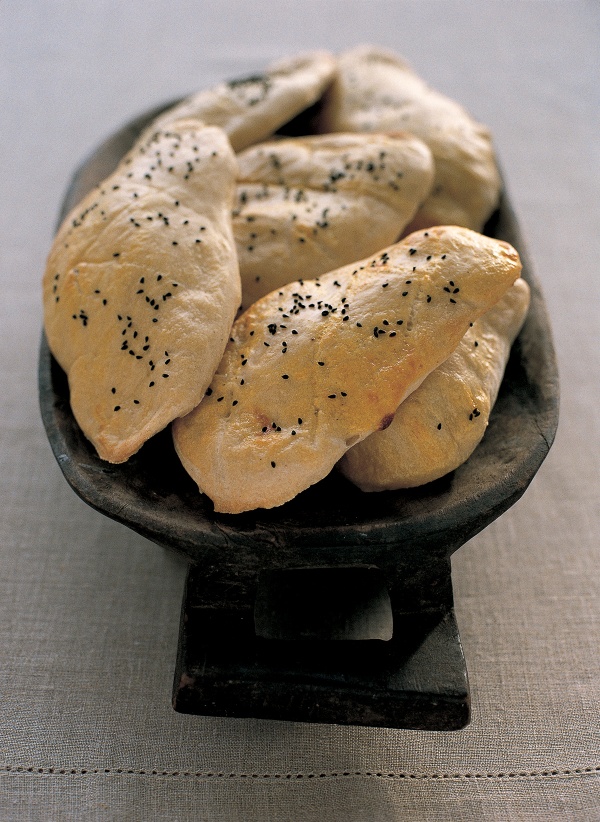
{Nigellan Flatbread by Nigella}

Nigellan Flatbread

Look, the name is meant to be a bit of a joke, but what I'm talking about is a pitta-like bread, glazed golden with beaten egg and sprinkled with nigella seeds.

This is what I make when I'm in mezze-mode. It's not hard, and although I love some of the flatbreads you can buy, it gives me more pleasure to make these, doubling the quantity and putting the flat oval loaves in the oven in batches so there's always a wooden board of warm, dippable bread on the table.

Makes: 6 flatbreads

INGREDIENTS

- FOR THE BREAD

500 grams strong white bread flour
7 grams easy-blend yeast (or 15g / 1 tablespoon fresh yeast)
2 teaspoons salt
2 tablespoons plain yoghurt
2 tablespoons olive oil (plus more for greasing)
approx. 300 millilitres warm water

- FOR THE GLAZE

1 large egg
1 teaspoon water
1 teaspoon plain yoghurt
1 tablespoon nigella seeds

METHOD

Combine the flour, yeast and salt in a large bowl and make a well. Dollop the yoghurt and oil into a measuring jug and add warm water to come up to the 350ml mark / to 1 cup plus 7 tablespoons. Give a quick beat with a fork to combine, then pour this liquid into the dry ingredients, and mix with your hands or a wooden spoon, adding more liquid as needed, to form a firm but soft dough.
Turn out onto a floured surface (or set your mixer and dough hook to work) and start kneading. Add more flour as needed until you've got a smooth, supple and elastic dough. Form the dough into a ball, grease a bowl and turn the dough in it so it's lightly oiled all over. Cover the bowl with clingfilm and leave to rise for about an hour or so, until doubled in size.
Punch the dough down, then leave to rest for 10 minutes. Preheat the oven to 220ºC/200ºC Fan/gas mark 7/425ºF. Tear the dough into 3, and then halve each piece. Form each of these 6 little pieces into an egg-shape and, one by one, roll them out to make a flat, elongated, if irregular oval. Place on two baking sheets about 3cm / 1 inch apart, cover with tea towels and leave to prove for 20 minutes, until puffy.
Using the blunt side of an ordinary kitchen knife, draw diagonal parallel lines across the loaves about 2 cm / 1 inch apart. Do the same now the other direction, so you've got a loose criss-cross.
Beat the egg with the water and yoghurt and, using a pastry brush, paint this over the breads. Sprinkle on the nigella seeds and bake in the hot oven for 8-10 minutes, by which time the loaves will be golden, puffed up in places and cooked through.
Remove them from the oven and drape immediately and for a few minutes with a tea towel so that these small, flat, breads don't dry up and get too crusty.

{Nigella's Risotto Bolognese}

Image of Nigella's Risotto Bolognese

There’s no denying that this recipe involves a bit of fiddle-faddling, but so soothing is the process, so welcoming and enveloping the savoury smells emanating from stove and oven as it cooks, so ambrosial the taste, so universally rewarding the experience, that the labour involved can be embraced gladly.

Serves: 6-8

Ingredients

1 onion (peeled and quartered)
1 carrot (peeled and halved)
1 stick celery (halved)
1 small clove garlic (peeled)
1 handful fresh parsley
75 grams rindless streaky bacon
4 anchovy fillets (optional)
50 grams unsalted butter plus 1 tablespoon extra
½ teaspoon regular olive oil
250 grams minced beef
80 millilitres marsala
1 x 400 grams can chopped tomatoes
1 x 15ml tablespoon tomato puree
2 x 15ml tablespoons full fat milk
2 litres veal stock or use a mixture of beef and chicken stock
2 bay leaves
500 grams risotto rice
6 x 15ml tablespoons grated parmesan plus extra to serve
salt to taste
black pepper to taste

Method

Preheat the oven to 150°C/300°F/gas mark 2. Put the onion, carrot, celery, garlic, parsley, bacon and anchovy into a processor and whiz to a fine mush.
Heat the 50g / 3 tablespoons butter and 1/2 teaspoon oil in a deep, heavy ovenproof casserole with a lid. Tip in the contents of the processor and cook for about 5 minutes until softened.
Add the meat and let it brown a little, breaking it up in the pan, then add the marsala. Process the tomatoes until smooth, and add to the meat.
Stir the tomato puree into the milk and then add this mixture to the pan, along with 500ml / 2 cups veal stock and the bay leaves.
Bring to the boil on the hob, then clamp on the lid and transfer the casserole to the oven for 1 hour.
Once the meat sauce is out of the oven, fish out the bay leaves. Heat the remaining 1.5 litres veal stock in another saucepan and keep that warm over a very low heat, then put the meat sauce on a low heat next to it.
Stir the rice into the meat sauce, and then add a ladleful of the hot stock. Stir until the rice and sauce become thick again and then add another hot ladleful of stock.
Continue to add the stock as needed, though only a small ladleful at a time, stirring all the time as you go. Check to see if the rice is cooked after about 18 minutes - you may not need all the stock before this happens.
When it's ready, turn off the heat and stir or beat in, with your wooden spoon, the cheese and the extra tablespoon of butter before seasoning to taste and doling out into shallow warmed bowls. Serve with extra Parmesan, if you like.

Additional information

- Make ahead note

The meat sauce can be cooked up to 2 days ahead. Transfer to non-metallic bowl to cool then cover and refrigerate as soon as possible. Return to the casserole and reheat gently, stirring occasionally, until piping hot, then add the rice and continue as directed in recipe.

- Freeze note

The cooled meat sauce can be frozen in airtight container for up to 3 months. Defrost overnight in fridge and reheat as above.

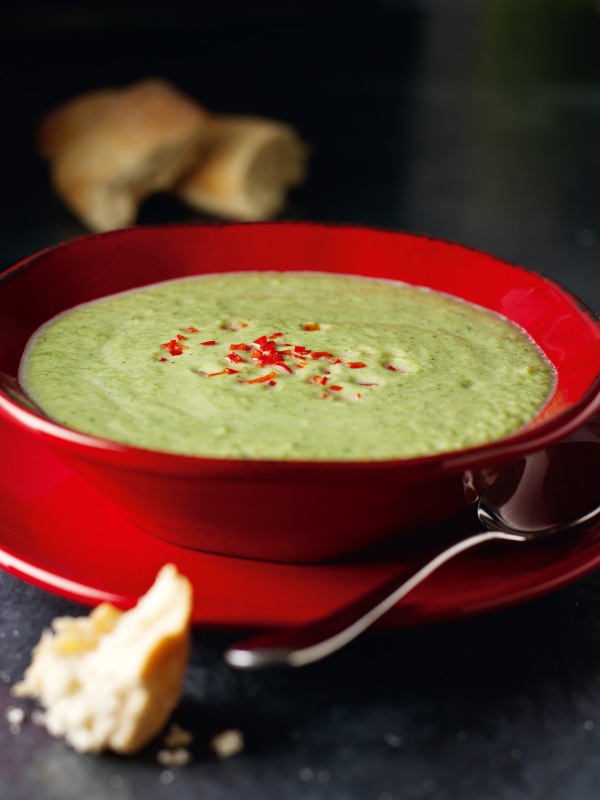
{Broccoli and Stilton Cheese Soup}

Broccoli and Stilton Soup

I use frozen broccoli; actually, frozen organic broccoli, if that makes you feel better. In fact, this is better when made with frozen, and certainly more convenient for an impromptu standby.

Serves: 4 as a main, 8 as a starter

Ingredients

3 tablespoons garlic infused olive oil
6 spring onions (finely chopped)
2 teaspoons dried thyme
1 kilogram frozen broccoli
1250 millilitres hot vegetable stock (from concentrate or cube)
200 grams crumbled or chopped stilton cheese
freshly ground black pepper
1 long fresh red chilli pepper (deseeded & finely chopped (optional))

Method

Put the garlic oil in a large pan over a medium heat, add the chopped spring onions and cook for a couple of minutes.
Add the thyme and the frozen broccoli, and stir in the heat for a minute or so.
Add the hot vegetable stock and the crumbled or chopped Stilton and bring to a bubble, then clamp on the lid and cook for 5 minutes.
Liquidize in a blender (or failing that a processor) - in batches - then pour back in the pan and heat if it's cooled too much while blending, and add pepper to taste.
Scatter with a confetti of red chilli dice on serving, if you feel like it.

viernes, 23 de diciembre de 2016

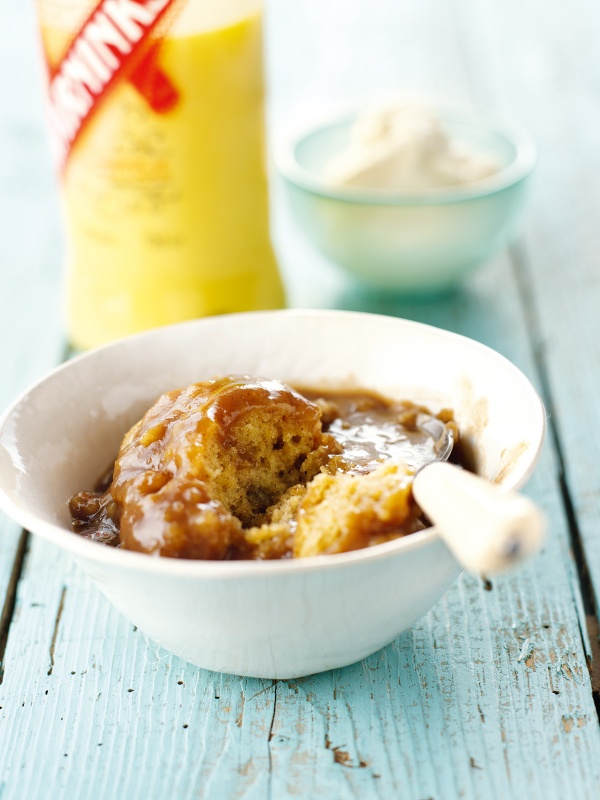
{Holiday Hot Cake With Eggnog Cream}


A warming, welcoming pud full of seasonal spice that can be thrown together in a matter of minutes. Truly a pudding to give thanks for.

Serves: 6-8

Ingredients

150 g. plain flour
300 g. light brown muscovado sugar
1 teaspoon baking powder
2 teaspoons ground ginger
2 teaspoons mixed spice
125 ml. full fat milk
60 ml. vegetable oil
1 large egg
6 teaspoons butter
500 ml. boiling water
350 ml. double cream
125 ml. advocaat

Method

Preheat oven to 220°C/gas mark 7/425ºF and place a baking sheet on the shelf. Put water on to boil.
Mix together the flour, 100g / ½ cup of the sugar, the baking powder, 1 teaspoon of the ground ginger, 1 teaspoon of the mixed spice, and the milk, oil and egg.
Put into a greased, round baking dish (23cm diameter x 6cm deep / 9 inch round x 2¼ inches deep).
In another bowl, mix together the remaining 200g / 1 cup of sugar with the remaining teaspoons each of mixed spice and ground ginger, and sprinkle over the batter in its baking dish. Dot the butter on top and pour the boiling water over the mixture. Trust me.
Put the dish on the baking sheet in the oven for 30 minutes. Let stand for 10 minutes before serving, and make sure you scoop out the sauce beneath the sponge in the dish.
Put the cream and advocaat into a bowl. Using an electric whisk, whip until thick but still soft. Serve with the Holiday Hotcake.

Inspiration: www.nigella.com

martes, 20 de diciembre de 2016

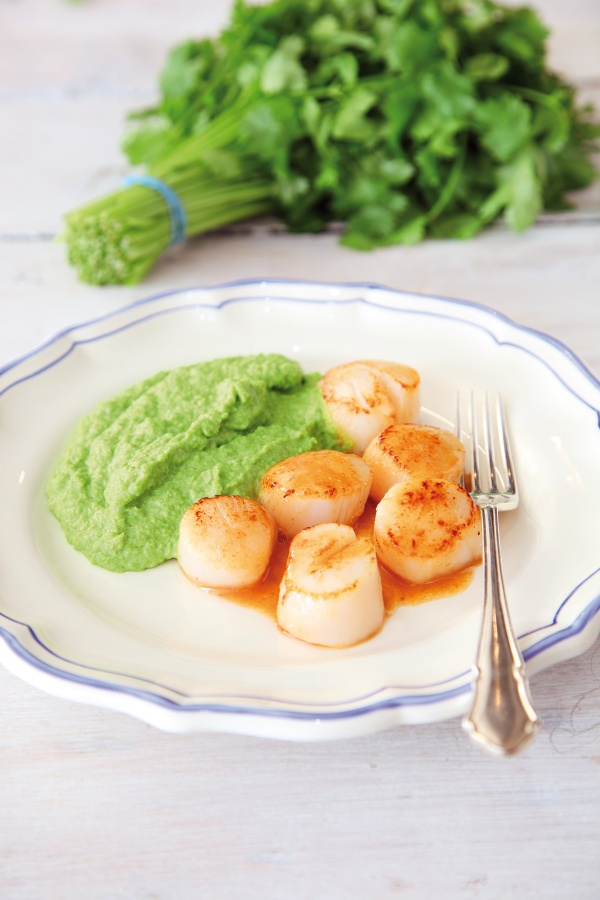
{Scallops with Thai scented pea puree}

Scallops With Thai Scented Pea Puree

I love the bouncy sweetness of scallops and, although you might think the equal sweetness of the peas would be too much alongside, the deep flavour of coriander and chilli and the sharpness of lemongrass miraculously provided by the Thai green curry paste, make it a zingy and yet still comforting accompaniment. This is a real treat of a supper, both for the eater and the cook.

Serves: 2

In the market

500 g. frozen petits pois
1 tablespoon green thai curry paste
75 g. creme fraiche
Sea salt flakes (to taste)
2 teaspoons groundnut oil (or other flavourless oil)
2 teaspoons butter
6 large scallops (preferably diver caught) (or 10-12 small ones)
juice of 1 lime
2 tablespoons chopped fresh coriander (or Thai basil)

In the kitchen

Cook the peas in boiling, slightly salted water until tender, then drain and tip into a blender, adding 1 tablespoon curry paste and the crème fraîche. Season to taste with salt and perhaps add more curry paste, depending how strong it is.
Heat the oil and butter in a frying pan until foamy, then fry the scallops for about 2 minutes a side. If you are using big scallops, then it is sometimes easier to cut them in half across. When they are cooked, they will have just lost their raw look in the middle and be lusciously tender, while golden and almost caramelized on the outside.
Lift the scallops onto 2 warmed plates and then de-glaze the hot pan by squeezing in the lime juice. stir to mix well and pick up every scrap of flavour, then pour this over the scallops on each plate.
Dish up the pea purée alongside the scallops, and sprinkle with the chopped coriander or thai basil. Serve with another wedge of lime, if you feel like it.

Fuente: www.nigella.com

{Parmesan shortbreads}

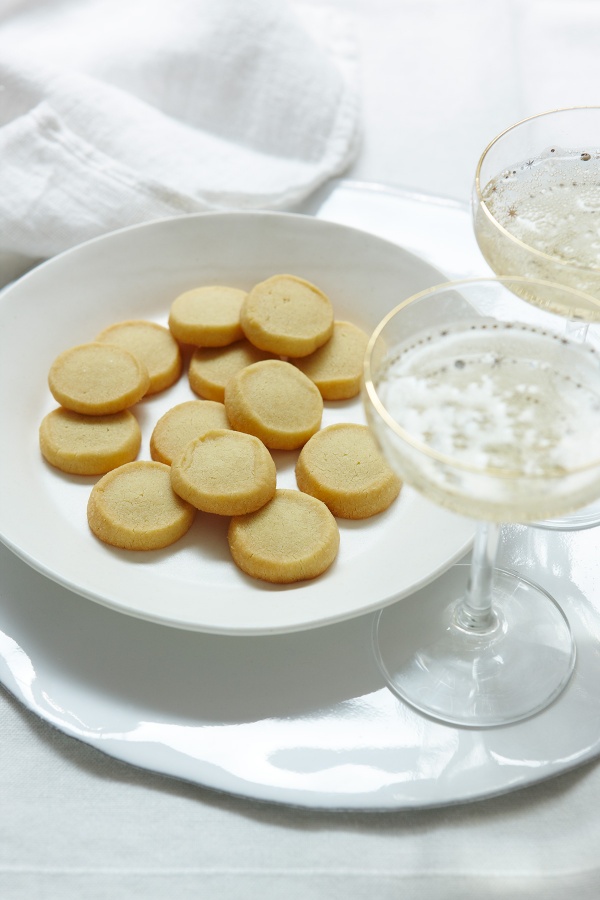
Parmesan Shortbreads

Makes: 35-40 shortbreads

This is an Italian-inspired recipe that comes to me from Australia via Brazil. To explain: a Brazilian friend, and the best cook I know, Helio Fenerich made it for me, and I had to keep (rudely) asking him to carry on making it for me. Eventually, I begged him for the recipe, which he told me he’d found in Australia. The journey was certainly worthwhile: it is a complete winner; I go into auto-Parmesan-shortbread mode whenever I have friends coming for supper, as not only is it perfect with drinks, but it can be made in advance.

Indeed, you can make the dough, wrap it and then leave in the fridge for up to 3 days before slicing and baking it as instructed below, although you will need to let these cheese-scented cylinders sit out on a kitchen surface just long enough to get the fridge-chill off them before slicing.

In the market

150 g. plain flour
75 g. grated parmesan
100 g. soft unsalted butter
1 large egg yolk

In the kitchen

1) Mix all the ingredients together, using bowl and spoon, electric mixer or food processor as wished, until a golden dough begins to form a clump.
2) Turn it out onto a surface and knead for about 30 seconds until smooth, then divide into two.
3) Take the first half and, using your hands, roll it into a cylinder, as uniform as possible without stressing over it, about 3 cm (1¼ inches) in diameter.
4) Make sure the ends are flat, too, so that the cylinder resembles a roll of coins. Now roll this up in a piece of clingfilm, twisting the clingfilm at the ends, like a Christmas cracker, and put the roll in the fridge, then proceed in the same way with the remaining half of the dough.
5) Preheat the oven to 180° C (350º F) while the wrapped cylinders of dough rest in the fridge for about 45 minutes, by which time you should be able to cut them into thick slices easily: aim for about 1 cm (½ inch) thick.
6) Arrange on a baking sheet lined with baking parchment, and put in the oven for 15–20 minutes, when they should be just beginning to turn a pale gold at the edges.
7) Remove from the oven, then leave to cool (if you can) before eating.

Fuente: www.nigella.com