Mostrando entradas con la etiqueta jengibre. Mostrar todas las entradas

miércoles, 30 de octubre de 2019

{Pumpkin soup with pears}

Kürbis-Suppe mit Birnen

Market

- Soup

1 piece of ginger approx. 1-2 cm
1 shallot
2 pears
20 gr (1/8 cup) vegan butter or olive oil
2 Tbsp coconut blossom sugar
500 gr (18 oz.) hokkaido or butternut squash
100 gr (3.5 oz.) potatoes
1/2 Tsp curry powder
500 ml ( 2 1/8 cup) water
1 tsp veggie broth
100 ml (1/2 cup) plant-based milk (e.g. soy or oat)
1 tsp salt
1 pinch pepper
2 pinches nutmeg
100 ml (1/2 cup) plant-based cream (e.g. soy or oat)

- Topping

20 gr (1/8 cup) (1/8 cup) vegan butter or olive oil
1 pear
100 gr (3.5 oz.) mushrooms
100 gr (3.5 oz.) Brussels sprouts
1 slice toast
1 Tbsp coconut blossom sugar
salt & pepper

Kitchen

- Soup

Peel the ginger and finely chop it
Finely chop the shallot and sauté it in vegan butter along with the ginger
Dice the pears and add them to the pan, sprinkle with sugar and caramelize it while stirring (approx. 5 minutes)
Dice the pumpkin and potatoes and add them to the pan
Add the curry powder
Deglaze with broth, add milk
Let it simmer for 15-20 minutes with the lid closed until the pumpkin is soft
Mash the soup, add the cream, re-heat and season with salt, pepper and nutmeg

- Topping

Dice the pear, clean the Brussels sprouts and cut them in half, clean the mushrooms and slice them
Dice the toast slice
Heat up butter or oilive oil in a pan and add pear, Brussels sprout, mushrooms and toast
Sprinkle sugar on top and fry everything until it turns golden brown and the Brussels sprouts are well done
Season with salt and pepper
Serve the soup with this topping, some oil (e.g. truffle) and fresh thyme. #bestofvegan

miércoles, 5 de abril de 2017

viernes, 23 de diciembre de 2016

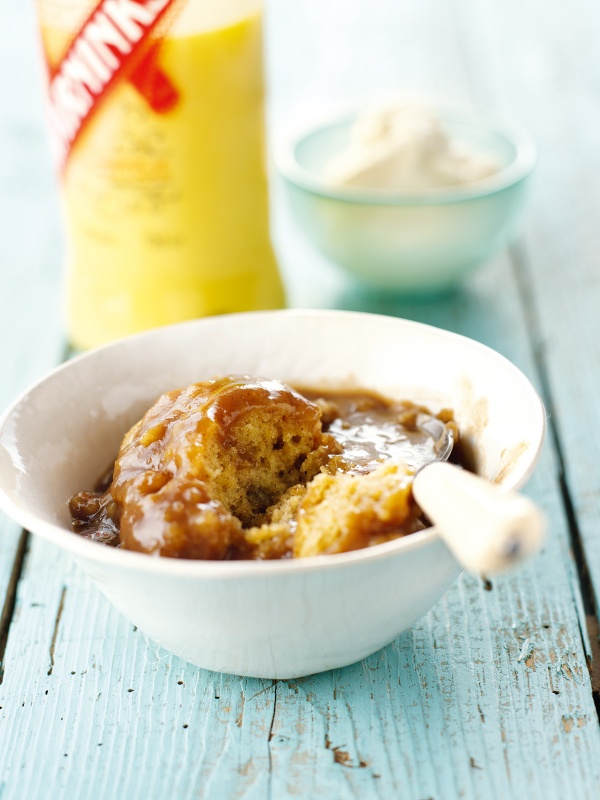
{Holiday Hot Cake With Eggnog Cream}


A warming, welcoming pud full of seasonal spice that can be thrown together in a matter of minutes. Truly a pudding to give thanks for.

Serves: 6-8

Ingredients

150 g. plain flour
300 g. light brown muscovado sugar
1 teaspoon baking powder
2 teaspoons ground ginger
2 teaspoons mixed spice
125 ml. full fat milk
60 ml. vegetable oil
1 large egg
6 teaspoons butter
500 ml. boiling water
350 ml. double cream
125 ml. advocaat

Method

Preheat oven to 220°C/gas mark 7/425ºF and place a baking sheet on the shelf. Put water on to boil.
Mix together the flour, 100g / ½ cup of the sugar, the baking powder, 1 teaspoon of the ground ginger, 1 teaspoon of the mixed spice, and the milk, oil and egg.
Put into a greased, round baking dish (23cm diameter x 6cm deep / 9 inch round x 2¼ inches deep).
In another bowl, mix together the remaining 200g / 1 cup of sugar with the remaining teaspoons each of mixed spice and ground ginger, and sprinkle over the batter in its baking dish. Dot the butter on top and pour the boiling water over the mixture. Trust me.
Put the dish on the baking sheet in the oven for 30 minutes. Let stand for 10 minutes before serving, and make sure you scoop out the sauce beneath the sponge in the dish.
Put the cream and advocaat into a bowl. Using an electric whisk, whip until thick but still soft. Serve with the Holiday Hotcake.

Inspiration: www.nigella.com

martes, 20 de diciembre de 2016

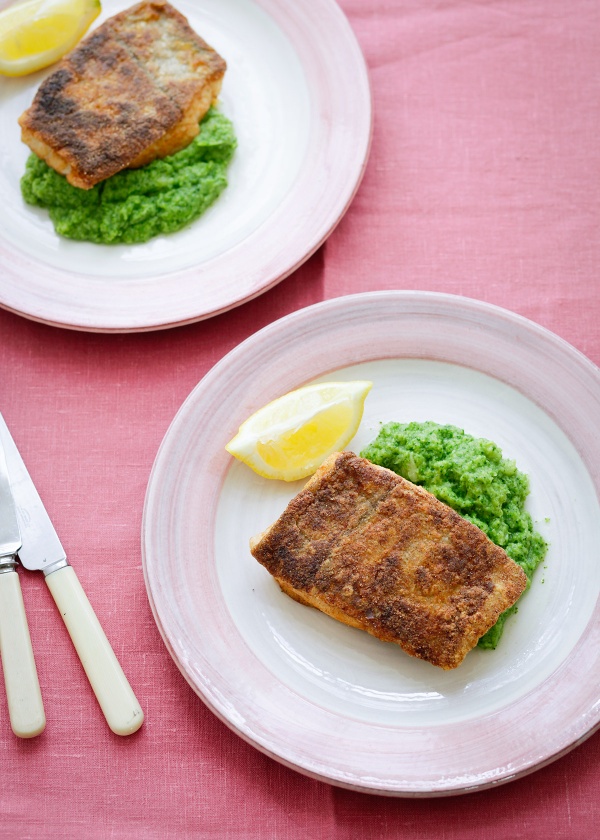
{Spiced and Fried Haddock With Broccoli Puree}


This recipe could hardly be easier, and requires no complication, nor any effort to keep it simple. Good fish, lightly dredged in spiced flour then flash-fried, is an old-fashioned pleasure, and one to be savoured. Here I use gluten-free flour in preference to regular plain flour to coat the fish. I had wanted the slight grittiness of rice flour, but had none in the house, and gluten-free flour (which I did have) contains rice flour and worked fabulously. Obviously, you can use plain flour if you wish. And while the verdiglorious accompaniment may look like old-time mushy peas, it is, in fact, broccoli, blitzed with a stick blender. I use frozen broccoli simply because I find that, cooked in this way, the taste is – counterintuitively – fresher and needs no more added to it than a little salt and pepper to taste, along with the mildest, yet emphatically creamy, hit of coconut. If you cringe at the idea of coconuttiness, however delicate, then use butter or a really good extra-virgin olive oil instead.

Serves: 2

In the market

- For the broccoli puree

500 g. frozen broccoli florets
2 tablespoons cold-pressed coconut oil (or butter or extra-virgin olive oil)
salt (to taste)
pepper (to taste)

- For the spiced haddock

3 tablespoons gluten-free or plain flour
1 teaspoon ground ginger
1 teaspoon paprika (pimentón)
1 teaspoon fine sea salt
2 haddock fillets (skin on, approx. 350g/12oz total) (abadejo)
1 tablespoon sunflower oil
½ lemons (cut into wedges)

In the kitchen

Put a pan of water on for the broccoli, and when it comes to the boil, salt to taste and cook the frozen broccoli florets (unthawed) for 10 minutes from the time the water comes back to the boil, or until it’s tender enough to be puréed. Drain and return to the pan, along with 1 tablespoonful of cold-pressed coconut oil, and set about it with your stick blender, adding salt and pepper and a further tablespoon of oil to taste. Put the lid on and leave while you fry the fish, which is the work of moments.
Get out a plate in which the fish fillets can lie flat, and in it mix the flour, spices and salt, then dredge the fish on both sides, so that the fillets are well coated. Place a cast-iron pan or a heavy-based, non-stick frying pan – into which the fillets will fit neatly – on the stovetop or hob. In the case of the cast-iron pan, heat it before adding the sunflower oil; if using a non-stick frying pan, add the oil first.
When the oil is hot, put both fillets in the pan, skin-side down, and cook for 3 minutes. Turn them over and cook for another 1½ minutes, or until the fish is just cooked through. These timings are based on fillets that are – as you can see – square-ish and quite thick. If yours are thinner, 2 minutes skin-side down, followed by 1 minute on the other side, should do it.
Once the fish is cooked, transfer to a plate lined with kitchen roll while you dollop the broccoli purée onto 2 dinner plates. Add the haddock fillets, crisp-skin-side-up, and eat with calm relish, and possibly a spritz of lemon.

Fuente: www.nigella.com

viernes, 22 de enero de 2016

{Tarta de calabaza, azúcar negra y jengibre}

Porciones: 8

Tiempo de preparación: 45 minutos

En el mercado

- Para la masa

200 g. de harina 0000
100 g. de manteca
100 g. de azúcar impalpable
1 huevo

- Para el relleno

2 tazas de puré de calabaza
3/4 taza de azúcar negra
1 y 1/2 tazas de queso crema
3 huevos
1 cucharadita de canela
1 cucharadita de jengibre rallado
1 cucharadita de nuez moscada
2 cucharadas de harina

En la cocina

- Para la masa

1) Mezclar la harina con el azúcar. Agregar la manteca y formar una arena. Y luego, agregar el huevo.
2) Forrar un molde de 26 / 28 cm. de diámetro, con la masa. Llevar la tartera unos minutos al freezer (para que no se bajen los bordes en la cocción) y precocinar a 180° C durante 5 minutos.

- Para el relleno

1) Procesar todos los ingredientes hasta que se mezclen bien.
2) Volcar sobre la masa y cocinar durante 30 minutos (debe quedar con la textura de un flan).
3) Sacar del horno, dejar enfriar y servir con helado, crema o yogur.

Fuente: Revista Oh La Lá

jueves, 3 de diciembre de 2015

{Bastones de pescados fritos picantes}

Especial Ohno: bastones de pescados fritos picantes

Deliciosos, así son estos bastones de pescados, una de las muchas ricas recetas del libro De mar a mar, del chef Takehiro Ohno, donde resume su experiencia a través de los océanos Pacífico (cocina oriental y peruana) y Atlántico (cocinas españolas y argentinas)
  
Este plato, en la cocina asiática es equivalente a las alitas de pollo fritas tan populares en Norteamérica. De todas formas, si resulta incómodo cortar el pescado con el espinazo, se pueden preparar perfectamente con bastones de filete sin espinas, para mayor comodidad de los comensales.

Porciones: 4

En el mercado

400 g. de filetes de lenguado  (u otro pescado blanco) fresco, limpio, seco y con piel
1 cucharada de salsa de soja
½ cucharada de sake (vino de arroz)
½ cucharada de jugo de jengibre (rallado y exprimido con las manos)
120 g. de maicena
1 y ½ litro aceite de maíz  (u otro neutro para freír)
Sanshou (pimienta japonesa)

En la cocina

1) Cortar el pescado en tiras gruesas en forma diagonal y reservarlo bien limpio y seco.
2) Preparar la marinada mezclando en un recipiente la salsa de soja, el sake y el jugo de jengibre.
3) Colocar dentro los trozos de pescado y dejar marinar 20-30 minutos.
4) Calentar el aceite en una sartén.
5) Tener preparado un plato con la maicena para rebozar.
6) Retirar los trozos de pescado de la marinada y secarlos completamente con papel de cocina.
7) Trabajando de a pocos trozos por tanda, rebozarlos en la maicena y freírlos en el aceite hasta que estén bien dorados por ambos lados.
8) Servirlos calientes, espolvoreando encima un poco de sanshou o pimienta japonesa.

Tip: siempre que se reboza pescado para freír, este paso debe ser continuo. Nunca dejar todo rebozado esperando, ya que la humedad que todavía desprende el pescado absorberá el rebozado y el frito perderá calidad.
Esta recomendación es aplicable, en general, a cualquier fritura rebozada.

Fuente: www.glamout.com

{Veggie Burger, by Juliana López May}


Directo del libro "Sabores para compartir", de la reconocida cocinera Juliana López May, Glam Out te regala esta receta que convencerá a familias enteras. Una versión de la hamburguesa en clave vegetariana, repleta de sabor y onda.

Porciones: 6

En el mercado

1 taza de lentejas
1 taza de arroz yamaní
1 cebolla colorada en brunoise
1 zanahoria en brunoise
½ morrón colorado en brunoise
1 diente de ajo picado
½ cucharada de raíz de jengibre picada
1 huevo o clara si es necesario
½ taza de queso parmesano de excelente calidad
Cilantro picado
Sal y pimienta
Aceite de oliva
Pan rallado

En la cocina

1) Dorar las verduras en un wok bien caliente con una cucharada de aceite de oliva hasta que estén cocidas.
2) Cocinar el cereal y la legumbre deseados pasándolos un poco de la cocción al dente.
3) Mezclar las verduras ya cocidas con los granos, el cilantro, el queso parmesano, el huevo, la sal y la pimienta.
4) Procesar la preparación para lograr una buena pasta (sin triturarla demasiado). Darle forma y pasar por pan rallado.
5) Cocinar en sartén o en el horno caliente con un hilo de oliva en la placa.

Tip: Si lo vas a servir en sandwich que sea con babaganoush, lechuga y tomate.!

Fuente: www.glamout.com

lunes, 19 de octubre de 2015

{Key lime pie}

Key lime pie

By Ryan Chong Ryan Chong
From The Great British Bake Off

Ryan's take on key lime pie received great praise on The Great British Bake Off. Try it for yourself.

Ingredients

For the sweet ginger pastry

400g/14oz plain flour
80g/3oz icing sugar
4 tsp ground ginger
pinch salt
250g/9oz cold unsalted butter, cut into cubes
3 free-range eggs, yolks only
50ml/2fl oz ice cold water
1 tbsp olive oil (if needed)

For the lime filling

2 x 400g tins condensed milk
240ml/8½fl oz freshly squeezed lime juice (about 7 limes)
4 tsp grated lime zest (about 7 limes), plus extra for garnish
4 eggs, separated
225g/8oz sugar
3 lumps of stem ginger, chopped

For the decoration and finish

1 lime, very thinly sliced
1 tsp grated plain chocolate
6 sprigs mint
icing sugar
Preparation method
For the sweet ginger pastry, sift the flour, icing sugar, ground ginger and salt into a large mixing bowl.
Rub in the cubed butter until the mixture resembles breadcrumbs.
Mix the egg yolk into the water and add into the flour mixture, stirring with your hands until the mixture just comes together as a dough. Add olive oil if the dough is a little dry. Wrap the pastry in cling film and set aside in the fridge for 20-30 minutes.
Preheat the oven to 200C/400F/Gas 6.
Roll out the dough on a lightly floured surface to the thickness of a pound coin.
Drape the dough over the rolling pin and use it to transfer the pastry to a 30cm/12in tart case. Press the pastry into the tin, ensuring there are no gaps in the corner. Allow the excess pastry to overhang the tin.
Cover with clingfilm and chill for 20 minutes.
Prick the bottom of the pastry case with a fork. Line the case with baking paper and weigh it down with baking beans, rice or lentils.
Bake blind for 15 minutes, then remove the baking beans and paper and bake for a further 5-10 minutes. Set aside to cool on a rack.
Reduce the oven temperature to 170C/325F/Gas 3.
For the lime filling, in a large mixing bowl whisk together the condensed milk with the lime juice, lime zest and egg yolks until the mixture thickens. Stir in the chopped stem ginger. Taste the filling, and fold in some icing sugar, if needed.
Pour mixture into the pie crust, smooth the top with a palette knife and bake for 15-20 minutes. The pie is ready when the filling has a slight wobble or when the temperature in the centre has reached 70C when checked with a probe thermometer.
Set aside to cool for half an hour in the baking tin, then chill the pie in a refrigerator for as long as possible.
Place the sugar in a heavy-based deep saucepan with six tablespoons water over a medium heat. Bring the mixture to the boil without stirring, brushing down any sugar crystals on the side of the pan with a wet pastry brush. Remove the syrup from the heat when it reaches 120C/248F (the firm ball stage).
In a free-standing mixer, whisk the egg whites until stiff peaks form when the whisk is removed.
While whisking, pour the boiling syrup onto the egg whites in a thin, steady stream, being careful not to pour the syrup on to the whisk as it may splash onto your hands.
Continue to whisk the egg whites until the mixture is stiff, shiny and stable.
Place the meringue into a piping bag fitted with a 1.5cm round nozzle.
Once the pie is chilled, sprinkle the reserved lime zest and grated chocolate over the top of the pie.
Pipe the meringue around the edge of the pie in generous swirls.
Using a cook’s blowtorch, gently caramelise the meringue so that the top is light golden-brown.
Finish by placing the lime slices and mint sprigs on the meringue and dust over some icing sugar.
Top recipe tip
There is enough pastry and mixture for two 23cm/9in tarts.

viernes, 23 de enero de 2015

{Trago de peras, jengibre y whiskey, by Inés de los Santos}


Para darse un rico y refrescante gusto una tarde de calor, una propuesta muy original de frutas, por la bartender Inés De Los Santos
   
En el mercado

60 ml. de whisky
1 dash (*) de licor de pera
1 pera amarilla madura
1 cucharada de jengibre fresco
1 dash (*) de jugo de limón
1 dash (*) de almíbar
1 ramita de estragón fresco
1 vaso de trago largo

En la cocina

1) Lavar la pera y cortarla con la piel, separando el centro y las semillas. Colocarla en la licuadora.
2) Pelar el jengibre, cortarlo y agregarlo. Procesar todo junto con el jugo de limón.
3) Poner en la coctelera el whisky, el licor, el jugo procesado y el hielo.
4) Batir con fuerza y colar en un vaso con hielos nuevos.
5) Decorar y perfumar con una ramita de estragón. Si no se consigue estragón fresco, cortar unas rodajitas de jengibre y agregarlas al vaso.

(*) Un dash equivale a 1/8 de una cucharadita de té.

Fuente: www.revistasusana.com

martes, 1 de octubre de 2013

{Té de jengibre, by Martha Stewart}


El jengibre es la base de esta infusión que entibiará el alma mientras llena el hogar de una hermosa fragancia.

En el mercado

4 tazas de agua
60 ml. de jengibre
5 clavos de olor
1 limón

En la cocina

1) Combinar las tazas de agua con las rodajas finas de jengibre, los clavos de olor y el jugo de limón en una cacerola mediana.
2) Llevar a hervor.
3) Reducir el fuego y hervir a fuego lento durante 2 a 3 minutos.
4) Servir con miel o azúcar.

Fuente: www.marthastewart.com

sábado, 31 de agosto de 2013

{Plum pudding cake, by Nigel Slater}


Esta es una sorpresa especiada, dulce y maravillosa, ideal como budín o para acompañar el té de la tarde.

Tiempo de preparación: menos de 30 minutos 
Tiempo de cocción: de 30 minutos a 1 hora
Porciones: 8

En el mercado


- Para el budín

250 g. de harina común
1 cucharada ligeramente colmada de polvo de hornear
1 cucharada al ras de bicarbonato de sodio
1 cucharada al ras de canela en polvo
1 cucharada al ras de jengibre en polvo
200 g. de Kero (golden syrup)
2 cucharadas colmadas de abundante miel
125 g. de manteca
125 g. de azúcar morena
350 g. de ciruelas
2 huevos grandes
240 ml. de leche

- Para la cubierta de mermelada especiada de ciruelas

5 ciruelas
1 cucharada de azúcar morena
1 cucharada de manteca
1 cucharada de almíbar de frasco de jengibre
Crema doble, para servir

En la cocina

- Para el budín


1) Encender el horno a 180° C.
2) Use baking parchment to line a 24cm/9½in square cake tin or baking dish.
Sift the flour, baking powder, bicarbonate of soda, cinnamon and ginger into a bowl.
Warm the golden syrup, honey and butter very gently in a pan until the butter and sugar melts. Stir in the muscovardo sugar. Set aside and allow to cool slightly.
Halve the plums, or cut them into quarters if they are very large, and remove the stones.
Break the eggs into a bowl, pour in the milk and whisk lightly to mix.
Pour the golden syrup mixture into the flour and mix with a large, metal spoon. Pour in the egg and milk and continue stirring till you have a loose, almost sloppy batter without any traces of flour.
Tip the mixture into the lined cake tin, drop in the plums and bake for 30-35 minutes.
Now for the topping; halve and de-stone the plums and add to the same pan as you cooked the syrup and honey. Add the sugar, butter and the syrup from a jar of crystallised ginger. Cover and leave to cook down.
Serve the cake with a generous topping of the spicy plums and a dollop of cream.

Fuente: BBC Nigel Slater's simple cooking

lunes, 4 de abril de 2011

Irish sweet chicken


Ingredientes

1 y 1/2 k. de pollo cortado en trozos
3/4 taza de aceite vegetal o de maíz
1 y 1/2 taza de salsa de soja
4 y 1/2 cucharas de té de ajo picado
1 y 1/2 cucharas de jengibre picado
3/4 taza jugo naranja
3/4 taza de miel

Preparación

1) Mezclar todos los ingredientes excepto el pollo y obtener una salsa.
2) Colocar los trozos de pollo en un bowl de vidrio, cubrir y marinar durante 1 hora.
3) Remover del marinado y asar de 10 a 15 minutos.
3) Cocinar el marinado durante 20 minutos.
4) Colocar en una fuente sin el marinado, sirviéndolo aparte como salsa.
5) Servir como appetizer.

jueves, 31 de marzo de 2011

{Orange chicken}


Este plato lo probé durante mi luna de miel, cuando estábamos tomando un descanso en el SawGrass de Miami. Lo compré en una tienda de comida china llamada, Panda Express.
Se trata de plato proveniente de la región de Hunan en la zona central sur de China. Está preparado con trozos de pollo deshuesado ligeramente saltados en el wok con una salsa secreta de naranja dulce y picante.

El pollo estaba bien crujiente y la salsa era agridulce con algo de picante. Me pareció deliciosa.

Esta receta la preparé y su sabor resultó muy similar al de aquella tarde nublada de recién casada, llena de felicidad junto a Diego.

Ingredientes

1 k. de pollo
2 cucharadas de fécula de maíz
1/2 cucharadita de ajo
1/2 cucharadita de jengibre
1 taza de azúcar negra
1 cucharadita de piel de naranja
2 y 1/2 tazas de salsa de soja
1/2 taza de vinagre
1/4 taza de jugo de limón
2 cucharadas de jugo de naranja
1 y 1/2 tazas de agua
Aceite
1 cucharadita de pimienta
1 huevo
1 cucharadita de sal
1 y 1/2 taza de harina de trigo
2 cucharadas de agua

Preparación

1) Cortar el pollo en trozos de unos 2 centímetros.
2) En un bowl combinar la harina, la sal y la pimienta.
3) En otro bowl poner el huevo batido y pasar cada trozo de pollo por la harina, luego por el huevo y luego por la harina nuevamente. Si se repite el proceso, quedarán más crujientes.
4) Freír todo en aceite vegetal muy caliente hasta que estén dorados y reservar.
5) Para la salsa, mezclar en una olla el agua, el jugo de limón, el jugo de naranja, el vinagre y la salsa de soja, y cocinar a fuego medio por unos 5 minutos.
6) Luego, añadir el azúcar, la piel de naranja, el jengibre y el ajo. Cocinar hasta que hierva.
7) Luego, unir la fécula de maíz y disolver en 1/4 de taza de agua, y añadir de a poco, mezclando constantemente a la salsa que está al fuego. Dejar que espese por un minuto más y añadir el pollo.

sábado, 26 de febrero de 2011

Jerk Chicken


Debo decir que, la primera vez que probé este plato, lo hice en su versión original. Esto es, el típico plato jamaiquino, picante hasta el ardor.
La versión que verán a continuación, está adecuada al sabor argentino. Espero que la disfruten.

Ingredientes

- 1,5 kg. de pollo
- 8 dientes de ajo, finamente picados
- 3 cebollas medianas picadas
- 2 cucharadas de azúcar
- 2 cucharadas de sal
- 1/2 cucharadita de pimienta negra
- 2 cucharadas de jengibre
- 1/2 taza de aceite de oliva
- 1/2 taza de salsa de soja
- jugo de una lima
- 1 taza de jugo de naranja
- 1 taza de vinagre blanco

Preparación

1) Cortar las cebollas y el ajo.
2) Procesar todos los ingredientes en una procesadora (excluyendo el pollo) formando la salsa jerk.
3) Cortar el pollo en cubos.
4) Colocar la salsa junto con el pollo y dejar marinar toda la noche.
5) Cocinar en el horno durante 30 minutos.
6) Servir con arroz o cous cous.

Historia

Se cree que el Jerk Chicken fue concebido cuando los Maroons introdujeron técnicas de cocina africanas en Jamaica que fueron combinadas con ingredientes y condimentos nativos de Jamaica usados por los Arawak.

El método de ahumar la carne por un período prolongado de tiempo cumplía con dos propósitos práctivos, mantener alejados a los insectos de la carne cruda y preservarla por más tiempo una vez que ésta había sido cocida. This process also introduces a strong smoky flavour to the meat.

There are two commonly held theories regarding how the name "Jerk" came to be used. One is that it originates from the Spanish word "Charqui", used to describe dried meat. Over time this term evolved from "Charqui" to "Jerky" to "Jerk". Another theory is that the name derives from the practice of jerking (poking) holes in the meat to fill with spices prior to cooking. Nowadays, the word "Jerk" is used as a noun to describe the seasoning applied to jerked food and as a verb to describe the process of cooking used.

Fuente: http://www.jamaicatravelandculture.com

Y si digo Jamaica, no puedo dejar de mencionar al Rey del Reggae hoy y siempre, Bob Marley. Allí, en las hermosas playas de Negril, no hacía más que estar en todas partes.
Les dejo mi tema favorito. Three little birds.