Mostrando entradas con la etiqueta azafrán. Mostrar todas las entradas

viernes, 29 de noviembre de 2019

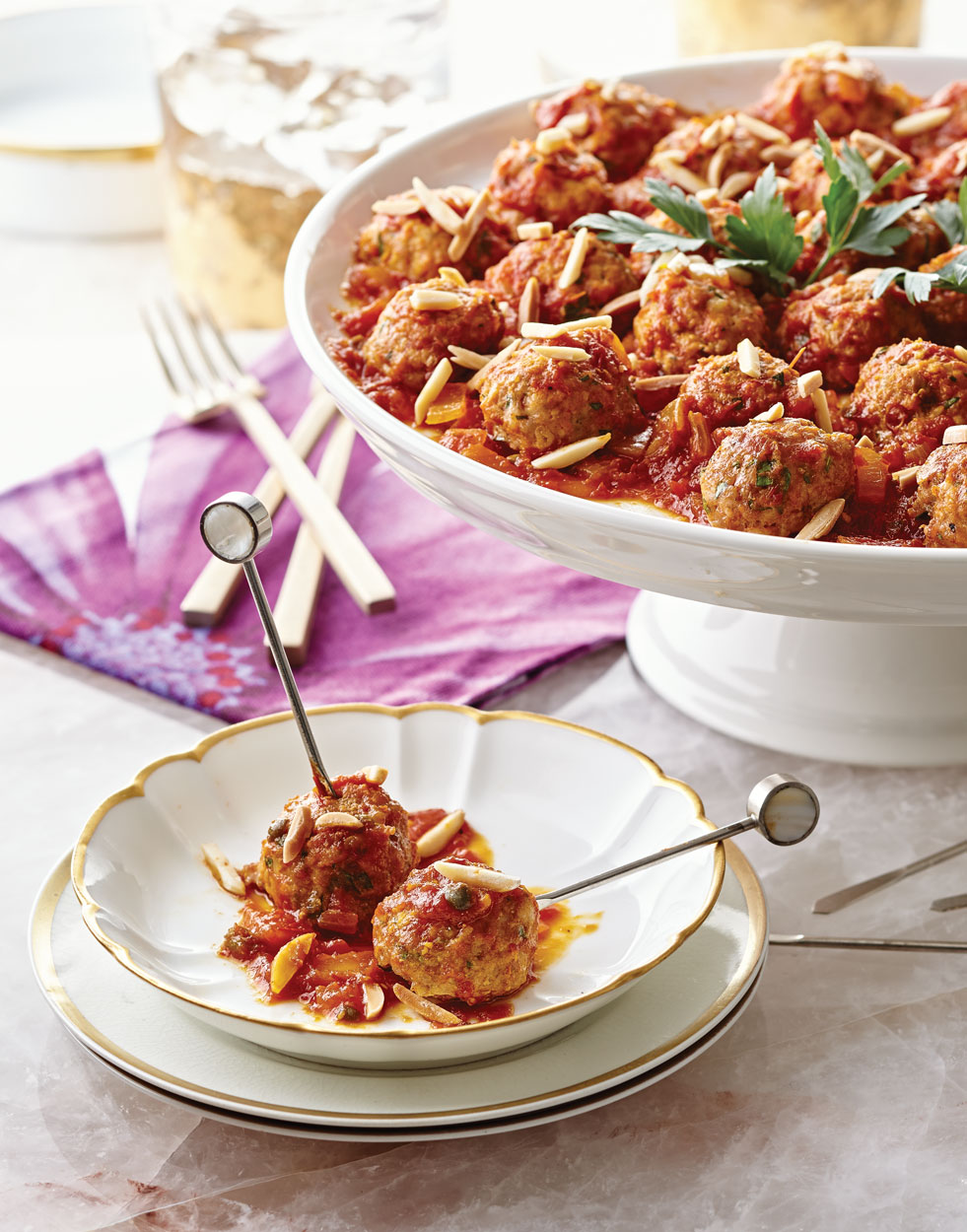
{Spanish Meatballs with Tomato-Saffron Sauce}


Add to your arsenal of appetizers with these Spanish-style meatballs (albóndigas) that are perfect for any celebration or revelry. They are a cocktail party’s best friend — they’re bite-sized, easy to eat, and full of flavor.

Makes: 16 servings
Total time: 35 minutes

In the market

- For the meatballs

2 slices white bread
½ cup whole milk
1 ½ lb. ground pork
1 cup grated Manchego or Parmesan
¼ cup chopped fresh parsley
2 Tbsp. olive oil
1 egg
1 Tbsp. smoked paprika
2 tsp. each minced fresh garlic, ground cumin, and ground coriander
1 tsp. kosher salt
¼ tsp. black pepper

- For the sauce

½ cup dry sherry
1 large pinch saffron threads (50 threads), crumbled
1 Tbsp. extra-virgin olive oil
1 cup diced onions
½ tsp. minced fresh garlic
1 dried bay leaf
1 can crushed tomatoes (15 oz.)
1 Tbsp. chopped capers
Fresh parsley leaves
Toasted slivered almonds

In the kitchen

Preheat oven to 425° with racks in middle and lowest positions.
Coat two baking sheets with nonstick spray.

- For the meatballs

1) Combine bread and milk in a large bowl, mashing together to form a paste.
2) Add pork, Manchego, ¼ cup parsley, 2 Tbsp. oil, egg, paprika, garlic, cumin, coriander, salt, and pepper and mix until combined.
3) Form pork mixture into 1-inch meatballs and transfer to prepared baking sheets.
4) Bake meatballs until golden and cooked through (12–15 minutes).

- For the sauce

1) Combine sherry and saffron in a small bowl; set aside.
2) Heat 1 Tbsp. oil in a large skillet over medium.
3) Add onions and cook until softened and starting to brown, about 6 minutes.
4) Add garlic and cook until fragrant, 1 minute.
5) Deglaze skillet with sherry mixture and add bay leaf; reduce 1 minute.
6) Add tomatoes and capers, season with salt and pepper, and simmer sauce over medium heat, about 5 minutes; discard bay leaf.
7) Transfer meatballs to sauce and keep warm until ready to serve.
8) Garnish meatballs with parsley leaves and almonds.

Web: www.cuisineathome.com

martes, 20 de diciembre de 2016

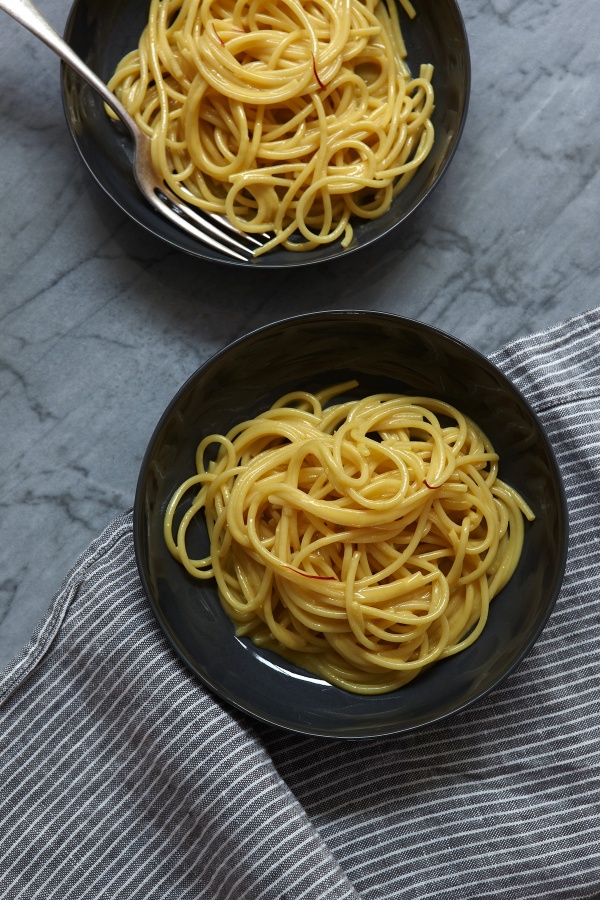
{Yellow spaghetti}

Yellow Spaghetti

Although this recipe does not itself issue from Italy, the inspiration is entirely Italian. One of my favourite things to eat is a risotto Milanese, sometimes called "risotto giallo" - or yellow risotto - and it occurred to me that pasta cooked similarly, or at least cooked to taste similar, would be perfect, and very easy.

So here it is: spaghetti in an eggy, saffron-tinted, lightly cheesed and creamy sauce: it is a bowlful of golden heaven.

Serves: 2

At the market

¼ teaspoon saffron strands (hebras de azafrán)
3 tablespoons marsala
200 grams spaghetti
salt (to taste)
2 large eggs
4 tablespoons grated parmesan (plus more to serve)
2 tablespoons double cream
salt to taste
pepper to taste
1 tablespoon soft unsalted butter

In the kitchen

Put plentiful water on for the pasta and at the same time put the saffron and Marsala into the littlest saucepan you have - such as one you'd melt butter in - and when the Marsala starts bubbling, take it off the heat and leave to steep.
When the pasta water comes to the boil, salt generously, then add the spaghetti and cook according to packet instructions, though start testing 2 minutes early. You want to make sure it's al dente, as it will swell a little in the sauce later.
While the spaghetti is cooking, get on with the creamy sauce, by whisking together the eggs, cheese and cream in a small bowl, adding a sprinkling of salt and a grinding of pepper.
Just before draining the spaghetti, remove a cupful of the starchy cooking liquid, then return the loosely drained pasta to its pan along with the butter and toss it over a low heat. Add 2 tablespoons of the pasta-cooking liquid to the saffron and Marsala in the little pan before pouring it over the pasta. Toss straightaway, working the sauce through the spaghetti, and watch the pale yellow of the spaghetti strands take on the deeper tint of the saffron; then remove the pan from the heat.
Now throw the egg, cheese and cream mixture over the pasta, and toss to combine gently but thoroughly, before checking for seasoning and dividing between 2 warmed bowls or plates. Serve with more grated Parmesan on the side.

Fuente: www.nigella.com

sábado, 5 de noviembre de 2011

{Cous cous de pollo con verduras y t’faya}


Esta receta la probe por primera vez, una semana atras, en el restaurante Ke Kafe, ubicada en el centro de Ibiza.

En mi breve estadía, su cocina que combina la asiatica con la marroqui, junto con su calida decoración, hicieron de este lugar mi refugio.

Descubrí que, la cocina marroquí, es un verdadero placer para los sentidos en cuanto a sus colores, texturas, sabores y olores. La forma en que mezclan lo dulce con lo salado, junto con el uso que hacen de las especias y de los frutos secos, se ha vuelto una delicia para mi.

Esta receta puede acompanarse con la t’faya, una tierna compota de cebolla confitada, almendras tostadas y pasas aromatizada con canela. Una verdadera delicia.

Porciones: 2

En el mercado

» Para el cous cous

2 pata-muslo de pollo
1 zucchini
2 zanahorias
1 puerro
1 trozo de calabaza
1 taza de cous cous
1 cucharadita de pimienta negra
2 cucharaditas de cúrcuma
1 cucharadita de jengibre molido
1 cucharadita de comino molido
Hebras de azafrán

» Para la t'faya

1 cebolla
1 puñado de almendras peladas y tostadas
1 puñado de garbanzos cocidos
1 puñado de pasas de uva
1/2 cucharadita de canela
1/2 cucharada de azúcar moreno
Aceite
Sal

En la cocina

» Para el pollo y las verduras

1) Lavar muy bien el pollo, bajo el chorro de agua fría. Si se quiere que el caldo quede más ligero, se puede quitar la piel.
2) Colocarlo en una olla con agua que lo cubra y ponerlo a cocer.
3) Retirar con una espumadera las impurezas que suban a la superficie y sazonarlo con la pimienta, la cúrcuma, el jengibre, el comino y las hebras de azafrán ligeramente tostadas.
4) Dejar que hierva tapado durante unos 20 minutos mientras preparamos las verduras.
5) Lavar bien las verduras. Pelar la calabaza y raspar las zanahorias. Dejar la piel de los calabacines. Las zanahorias y el puerro pueden ir enteros, la calabaza en trozos bien grandes y el calabacín entero, si es pequeño o cortado en dos, si es muy grande.
6) Meter todo dentro de la olla y dejarlo otros 10-15 minutos, hasta que el pollo esté hecho y las verduras tiernas pero no deshechas.

» Para el cous cous

1) Medir una taza y volcarla en un bol grande.
2) Agregar un chorrito pequeño de aceite y trabajar bien la sémola, frotándola entre los dedos intentando que el aceite impregne todos los granos. Se supone que éste crea un capa que envuelve a los granos e impide que se peguen unos a otros, al menos no mucho y así queda más suelta.
3) Tomar una taza y cuarto del caldo de haber cocido el pollo (que esté hirviendo) y añadirla a la sémola revolviendo bien para que la humedezca toda.
4) Dejar reposar.

» Para la t'faya

1) Cortar la cebolla en juliana fina y freírla a fuego medio con un poquito de sal hasta que esté muy dorada.
2) Incorporar las pasas, las almendras, la canela, el azúcar y mezclar todo bien.
3) Añadir un vaso de agua y subir el fuego.
4) Dejar cocer todo junto hasta que se evapore el agua y la t'faya tome consistencia de compota [unos 5 minutos].

» Para la presentacion del plato

Lo tradicional es hacerlo como aparece en la foto: disponer la sémola en el centro, el pollo encima, las verduras alrededor y la t'faya por encima.

Inspiration: Restaurant Ke Kafe, Ibiza.